The cove at a glance
- SizeA string of small coves, about 600 m in total
- Sand & seabedVery fine pale sand between rocky platforms
- SunsetOne beach faces west, one north; open view to the islets, among the island’s best-known sunsets
- ShelterWinds usually light, sometimes blowing off the land or along the shore
- Bus (summer 2026)P4 · A14
- BoatCruceros Portmany from Sant Antoni port, about 40 minutes
- ParkingRoad closed by a barrier; car park a few minutes’ walk before it
- AccessWheelchair-accessible rampLifeguard in high season
- By road12.5 km · 21 min from Sant Antoni25.3 km · 43 min from the airport
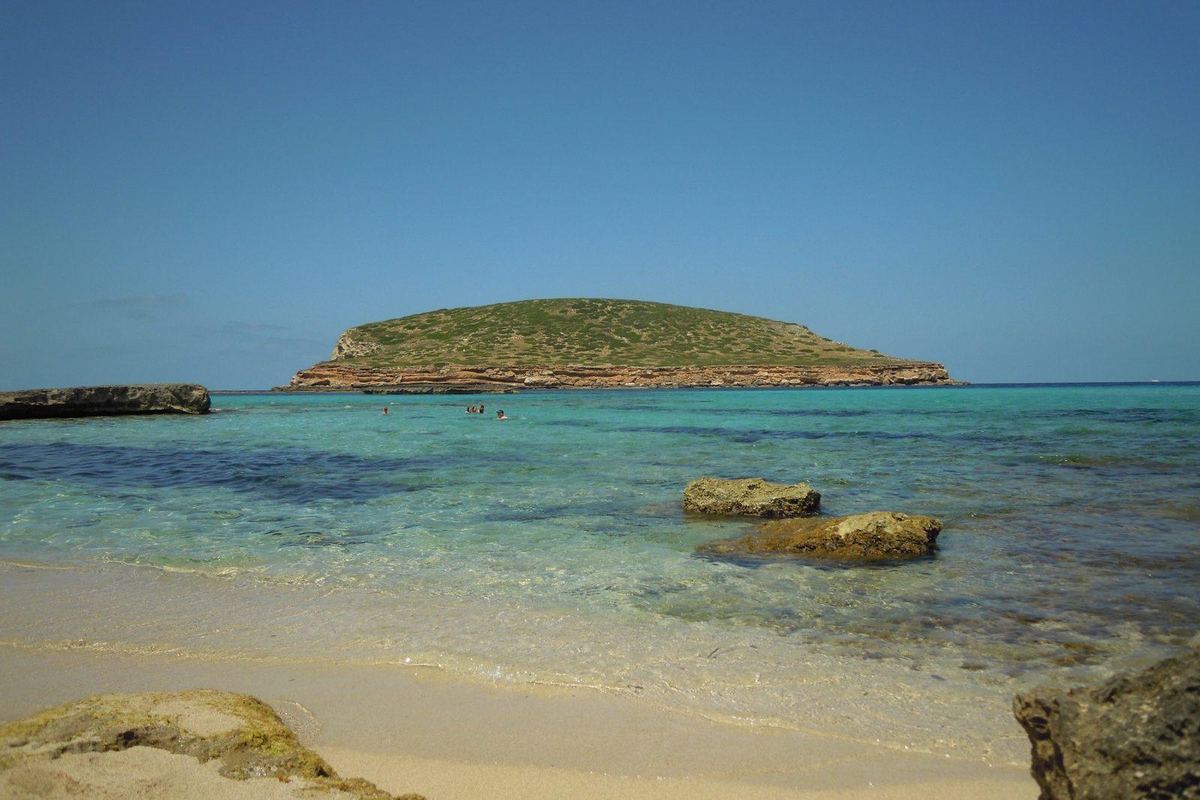
Ask anyone in Sant Antoni where to watch the sun go down and most will say Cala Comte. Ibiza’s west coast ends here in a series of low rock platforms and small sandy coves, and beyond them the sea is dotted with islets: S’Illa des Bosc closest in, then Sa Conillera, S’Espartar and the low reefs of Ses Bledes. When the sun sets between them, the rocks fill up with people who walked out an hour early to save a spot for the Cala Comte sunset.
Officially the place is Platges de Comte, “the Comte beaches”, in the plural, and that is the right way to think about it. It is not one beach but a string of interconnected coves with very fine, pale sand. The Sant Josep council listing counts about 600 metres of shoreline in all, while individual coves are only a few dozen metres across.
The beaches and the water
The two main beaches face different ways: the Platja de Tramuntana looks north and the Platja de Ponent looks west, with a rocky outcrop between them. Between the sandy patches the rock shelves into shallow channels of clear water. The colour is the reason the photographs of this place look edited.
Winds here are usually light, sometimes blowing off the land or along the shore. The islets sit inside the Es Vedrà, Es Vedranell i els Illots de Ponent nature reserve, and the council asks visitors to stay on the marked paths and not to anchor outside designated areas.
Lifeguards work in high season, there is sunbed rental, and toilets come with the restaurants. A wheelchair-accessible ramp leads to the sand. The beach is listed as non-smoking.
Snorkelling at Cala Comte
Snorkelling at Cala Comte means the rock platforms, the best snorkelling on this stretch of coast. Even in water you can stand in, you can see the seagrass, the rock and small shoals moving through them. Stay close to the rocks and keep an eye on the boat traffic towards S’Illa des Bosc. In summer the channel between the shore and the islet is busy with small boats, so swim where people on board can see you.
The Cala Comte sunset
The Cala Comte sunset works because the western beach faces open sea, with the islets as a foreground. In midsummer the sun sets well to the north-west; around the equinoxes it sets due west; in winter it moves south-west, towards the open water off Cala Tarida.
The venue most associated with the evening here is Sunset Ashram, on the rocky outcrop between the two main beaches. There are also two seafood restaurants on the cliffs, plus S’Illa des Bosc restaurant and the Cala Escondida beach bar. Nothing requires you to book: the rocks are public, and many people bring their own drinks and a jumper.
The sunset calculator shows the time, compass bearing and the length of the afterglow for any date. On the 7-day forecast a westerly wind means a choppier swim but often a clearer horizon.
How to get there: Cala Comte by bus, boat and car
Whichever way you choose, plan how to get there and back: the return after sunset is the hard part.
Bus. In summer 2026 the P4 line and the new A14 serve Platges de Comte. The A14 continues to Cala Bassa and Cala Tarida, so you can combine beaches without a car.
Boat. Cruceros Portmany sails from Sant Antoni harbour, about 40 minutes each way. Check the last return time, which is in the afternoon, before you plan to stay for the sunset.
Car. It is about 12.5 km and 21 minutes from Sant Antoni, or 25 km from the airport. The road to the beach is closed by a barrier, and the designated car park is a few minutes’ walk before it. For sunset in July and August, arrive by early evening.
On foot. The coastal track from Port des Torrent passes Cala Bassa and the 1763 Torre d’en Rovira before reaching Comte. Sant Josep lists the whole Port des Torrent to Comte route as 14.57 km out and back by bike.
Best time to visit
Cala Comte is very popular in high season, and island guides suggest early morning or late afternoon. For snorkelling at Cala Comte without the crowd, the quietest good weeks are late May, June and the second half of September, when the sea is warm but the car park is not yet full at five o’clock. In winter the beach bars close and buses thin out, so check how to get there before you set off, but the sunset is still there, and it comes early enough to fit after a late lunch.
Questions people ask
When is the Cala Comte sunset?
Sunset at Cala Comte moves from about 17:35 in late December to about 21:23 at the June solstice (local time). Get there an hour before to find a place on the rocks. The sunset calculator gives the exact time for any date.
How do I get to Cala Comte by bus?
In summer 2026 the P4 line and the new A14 serve Platges de Comte. The A14 also links it with Cala Bassa and Cala Tarida. Cruceros Portmany boats run from Sant Antoni harbour in about 40 minutes.
Can you drive to Cala Comte?
The last stretch of road is closed by a barrier. Park in the designated car park a few minutes' walk before it, and arrive early in summer, because it fills well before the sunset crowd.
Is Cala Comte good for snorkelling?
Yes. The rock platforms between the beaches drop into shallow, very clear channels, and the islets offshore are part of a nature reserve. Keep away from the boat channel towards S'Illa des Bosc, and stay inside the buoyed zone when boats are about.
Can you smoke on the beach at Cala Comte?
Platges de Comte is listed as a non-smoking beach. Please respect it, and take cigarette ends away with you on any beach.
Updated: